

Being open to God’s plan means recognizing the difference between needs and wants. Wants are desires we believe are critical but are not actually essential, like a new car, a bigger house, or a new job. Needs, however, are essential for living, such as food, water, and shelter. Clarifying these helps us follow God’s direction.
At times, it is difficult to distinguish between needs and wants. We shift our wants into the need category, believing that we deserve them or that they are necessary to make our lives better and more fulfilled.
If you put too many things in your need category, you will end up frustrated with life, hurt by others, and doubting God’s goodness. – Paul David Tripp, New Morning Mercies: A Daily Gospel Devotional
Believing in God’s goodness and provision leads to contentment. When we are content, we trust Christ, accept our circumstances, and are less driven by a desire for more.
Do not love this world nor the things it offers you, for when you love the world, you do not have the love of the Father in you. For the world offers only a craving for physical pleasure, a craving for everything we see, and pride in our achievements and possessions. These are not from the Father, but are from this world. And this world is fading away, along with everything that people crave. But anyone who does what pleases God will live forever. – 1 John 2:15-17, NLT
John’s words provide an example of what we should strive for in life. Depending on and looking to God for fulfillment and direction in differentiating needs and wants is challenging. But doing so will lead to contentment, and to achieve contentment, there are three areas to consider: making comparisons, trusting God, and gratitude.
Making Comparisons
 In this digital age, we are bombarded with an onslaught of people and things, making it all too easy to compare ourselves and covet new and/or better things. We compare ourselves with people who appear to have it all together, wanting what they have, such as well-behaved kids, a loving marriage, an interesting job, a beautiful house, etc.
“If only…” is the human condition of wanting what we do not have. We think that life will be better if only. Learning to be content in all situations (both in times of abundance and lack) requires one to examine one’s mindset and expectations.
Mindsets dictate expectations. We are told to renew our minds in Romans 12:2: “Don’t copy the behavior and customs of this world but let God transform you into a new person by changing the way you think. Then you will learn to know God’s will for you, which is good and pleasing and perfect.” (NLT) Thinking with a kingdom perspective shapes your expectations, allowing you to see God’s generosity and promises. In turn, it helps you differentiate between needs and wants.
When you call something a need, it is hard to let it go, especially when surrounded by so many things and opportunities. We become dissatisfied if these are not obtained, wanting what others have, telling ourselves it is essential, a need.
But we must learn to distinguish between needs and wants. Instead of trying to fill that emptiness in your soul with something better or newer, whether it be an item or a person, look to God. “And this same God who takes care of me will supply all your needs from his glorious riches, which have been given to us in Christ Jesus.” Philippians 4:19 (NLT)
Trusting God
 We often forget or negate Paul’s words by figuring it out on our own, attempting to control the narrative of our lives. I am reminded of a story in which my husband and I thought we knew best.
Many years ago, when we were a family of four, and our boys were little, we decided we should move from our 800-square-foot, one-bath home to something a little larger with two bathrooms. We made a list of the criteria for our new home, as well as the location we desired. After visiting many homes, none of which seemed to fit for one reason or another, we found it.
It was in our desired part of town, the price was within our range, and it met our criteria. We put in an offer, which was accepted. But then we received a phone call. The owners wanted to sell to a friend. We were crushed, confused, and upset. We thought this was the house that we needed.
Little did we know what God had for us. Not long after, a casual search was made, and the house was found. It was even better and a little larger, which was good, as a little over a year later, we had our daughter, and that house that we thought was so perfect would then have been too small.
That first house was not what we needed but what we wanted. We had it figured out, but God closed that door and then led us to what we needed. Two weeks later, our sorrow turned to joy with the house God intended for us. That was a lesson for us to trust in Him and His plan for us.
Often, we believe that we know best; after all, who knows us better than ourselves? Actually, Jesus does. He sees the big picture, the moving parts, the past, present, and future, and how our lives affect other lives. We do not exist in isolation; our actions don’t affect only ourselves. We are made for relationships and for working together.
When we try to control our circumstances, we often do not make the best decisions because we only see the small story. We need to ask God for wisdom, which He has promised us. We must listen to His voice with an open heart and open mind, as God speaks to us through His Word or uses other means to reach us.
For example, God used a radio broadcast to speak to a friend. My friend, let’s call her Kate, was discussing adoption with her husband. While her husband felt strongly that that was what they needed to do to complete their family, Kate had her doubts. Kate needed to clear her head, so she went for a drive. While driving, she turned on the radio, where the broadcast was talking about adoption.
 Not that hearing this confirmation alleviated all her concerns, but she did not believe in coincidences, so she thought that God was letting her know to trust Him. Just so you know, they did end up adopting two wonderful kids, thus completing their family.
This is an example of being still, listening to God, and being obedient. At times, we dismiss the needs God has for us because they are beyond our control or our comfort zone.
Gratitude
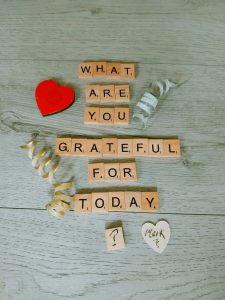
Gratitude is important and empowers us. Being grateful helps us focus on what we already have. Think about what you truly need, compared to what God says you need: “Seek the Kingdom of God above all else, and live righteously, and he will give you everything you need.” (Matt 6:33, NLT). Embrace mindfulness to help you discover whether your desires are genuine needs or merely wants. Remember, our desires are often shaped by what we observe around us.
Each day, we should appreciate what we have. Paul says to make your request known with praise and thanksgiving.
Be thankful in all circumstances, for this is God’s will for you who belong to Christ Jesus. – 1 Thessalonians 5:18, NLT
Look around at creation, at the beauty of nature, at the simple things that we often take for granted, like trees, flowers, sunshine, rainfall, animals, and the air we breathe. Let us be thankful for all that we have – the good and the bad. The good things are blessings, and the bad offer the opportunity for refinement and growth.
I know how to be brought low, and I know how to abound. In any and every circumstance, I have learned the secret of facing plenty and hunger, abundance and need. I can do all things through him who strengthens me. – Philippians 4:10-13, ESV
 Nothing plus Jesus is everything.
Ask yourself if you compare yourself to others. Are you trusting God? Do you express gratitude? Examining these areas will help you discern your needs vs. your wants, enabling you to follow God’s direction for your life.
What is the state of your heart? Is your heart hardened against receiving what God has for you? Are you broken by the world, or do you feel undeserving of God? Are you confused or unsure of God’s plan for you?
If you are seeking to understand your purpose, consider reaching out to me or another Christian counselor in our directory who can encourage and support you in your journey toward clarity.
Photos:
“I Trust You”, Courtesy of Brett Jordan, Unsplash.com, CC0 License; “What are you grateful for today?”, Courtesy of Mark Casey, Unsplash.com, CC0 License; “Materialism”, Courtesy of Jon Tyson, Unsplash.com, CC0 License; “Cross”, Courtesy of Aaron Burden, Unsplash.com, CC0 License